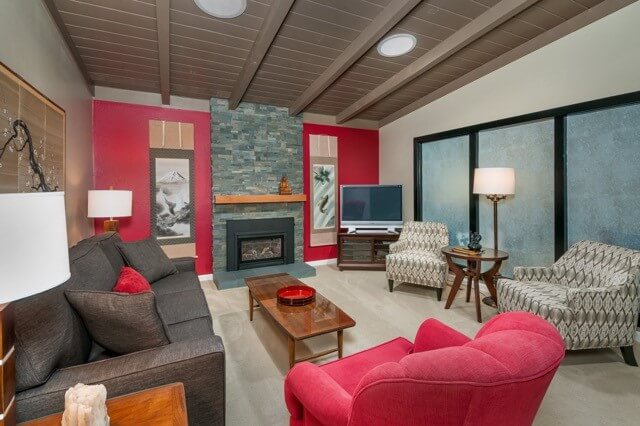
Tips for Selecting the Perfect Area Rug

Area rugs can serve many purposes. From an interior design standpoint, rugs support the color scheme and style of the room and can be the perfect starting point for selecting paint and furnishings. Rugs can help define separate areas in a space, and can also serve as a stunning focal point for a room. From a practical standpoint, rugs add warmth to a cool floor, help reduce noise, and provide a comfortable place for kids to play. With the enormous selection of rugs available, choosing the right one can be daunting. Below are a few tips to consider when choosing an area rug.

  • Decide how much you would like your rug to stand out in the room. Will the rug be a focal point, functioning like artwork in the room? If so, then choose a rug with a beautiful design or motif. For example, in traditionally decorated rooms, you might select a rug with a center medallion; for a more modern room, you might select an abstract or geometric design. If you select an area rug with a large and busy pattern, keep the other fabrics in the room simple. For example, a solid color sofa, and a subtle striped fabric on the chairs. If you would rather call attention to other features in the room, such as that gorgeous oil painting or that new red sofa, select a rug with a muted pattern or a solid color.
  • A rug for your dining room should be large enough to accommodate both the table as well as the chairs with people sitting in them. A rule of thumb is to add about 36″ to the width and length of the table. This will give enough room for diners to comfortably move their chairs in and out. Generally, china cabinets and buffets sit on the floor, not the area rug.
  • If you are purchasing a large rug to cover an entire room, leave a border of exposed floor on all sides. This will make the room look larger. If your rug is centered in the room, aim for equal amounts of floor showing on all sides. When this is not possible, aim for equal amounts on two opposite sides.
  • For stability, living room chairs should ideally be placed all the way on or all the way off the area rug. If chairs are heavy enough, this may not be a problem. Sofas are heavy enough that they can be partially on and off the rug.
  • A rug under a coffee table looks best if the rug is the same length as the sofa. An area rug measuring 6′ X 8′ or 5′ X 7′ is usually a good size in front of a sofa.
  • Use a waffle-weave mat called a “rug grip” underneath rugs that are placed on bare floors. This will protect the floor from scratches, as well as keep the rug in place.
  • Area rugs on top of wall-to-wall carpeting can cause a tripping hazard. I prefer not to use area rugs on top of carpeting, but if you do, make sure to use a rug grip made for this purpose. This type of rug grip has adhesive on both sides, causing the rug to stick to the carpeting.


What do you want underfoot?

It seems a lot of you are undertaking kitchen remodeling projects this year. Statistically speaking, kitchen remodels are among the most popular projects of the multi-billion remodeling industry. As many of you know, I remodeled my own kitchen two years ago now and still love everything about it. Even my love-hate relationship with my black granite counters has softened over time. My kitchen is currently featured in Women’s Day Special Interest Publications Budget Decorating Magazine. If you’d like to take a look, the magazine will be on store shelves until June 7.

A question I get asked frequently is what type of flooring is best to use in the kitchen. There is no one right answer to that question. There are many choices, each with advantages and disadvantages. I have hardwood floor in mine. I love it because of its warmth and color. Wood with a lot of grain and color variation, such as oak, hides scratches and crumbs better than wood with little grain, such as maple. It is relatively easy to maintain– just a broom and a damp mop are usually all you need. But wood floor is not for everyone. Although most wood floors can be refinished, if you have pets or are particularly bothered by scratches, wood may not be right for you.

Tile is one of my favorite options for kitchens. The variety in terms of color, pattern, and texture is almost limitless. Larger tiles help expand the space and also give you fewer grout lines to contend with than smaller tiles. Accent tiles and tile borders can add interest. Tile, however, can have its drawbacks. It is cold underfoot, is unforgiving if you drop a dish, and can be hard on the legs if you do a lot of cooking.

Vinyl floors come in a large variety of colors and patterns and can be a great choice for more budget-conscious clients. Good quality vinyl floors can last for many years, are soft underfoot and easy to keep clean. There are attractive slate and marble look-alikes, and colors to suit a variety of decorating styles.

Laminate floors continue to be very popular. Laminates are extremely durable and scratch-resistant. I had laminate floors when my kids were young, and was always amazed by how easy it was to clean things like markers, glue, crayon, and scuff marks. Laminates come in a large array of colors and styles, and can give you the look of wood or tile for a lower cost. As good as laminates can look, however, they don’t quite look like the real thing. For wood and tile purists, laminate may not be a good choice.

For people looking for “green” options, bamboo, cork and Linoleum are great choices. All provide a very unique and interesting look, are durable and eco-friendly. To make the best choice for you, seek guidance from a reputable flooring dealer, your decorator or designer, and friends who may have experience with the type of floor that interests you.

This article first appeared in Alameda Newspaper Group papers on April 14, 2007.

What wool carpet adds to room

If you are thinking about new carpeting for your home, there are many factors to keep in mind. For instance, durability is very important. How long will that carpeting last and still look good? Will it crush under my footsteps? Is it easy to keep clean? From an aesthetic point of view, appearance also matters a great deal. Does the carpeting look interesting? Is it available in the color I want? Other factors, such as air quality and allergens may also be important to you. For durability, good looks and enhanced indoor air quality, wool carpeting may be just what you’ve been looking for.

Wool carpeting has become more and more popular in recent years as an alternative to synthetic carpeting such as nylon and polyester. To augment my knowledge of wool carpets and rugs, I recently attended a seminar devoted to the characteristics of this natural material. Not only is wool beautiful and versatile, it also can provide several key benefits to homeowners.

For example, did you know that wool carpets and area rugs are actually good for your indoor environment? In every home and office, certain pollutants exist due to emissions from paint, wall coverings, adhesives, and certain building materials. Wool reacts chemically with the gases emitted, neutralizing and absorbing them, thereby helping to purify the indoor air. Allergy and asthma sufferers will also be pleased to learn that wool is non-allergenic and naturally resistant to dust mites.

In terms of durability, research has shown that high quality wool outperforms synthetic fibers such as polyester, nylon, acrylic and polypropylene. Many synthetic fibers are less resilient than wool and tend to crush over time, and are also less soil-resistant. Wool is naturally flame-retardant, while some synthetics are susceptible to burning or melting from cigarettes. I learned that casinos use wool carpeting because of the high foot traffic and the cigarettes. If wool is durable enough for a casino, it most certainly can handle everyday busy lives with active kids and pets.

From a design point of view, the choices available in wool are outstanding. A wide variety of colors are available, and, if you don’t see the exact color you are looking for, custom colors can be mixed. Wool carpets and rugs come in all textures, patterns and styles to fit with any decor from formal to casual. Floral patterns will look lovely in English country rooms; geometric designs will enhance contemporary rooms. There is even a wonderful wool mixed with silk that is unbelievably soft to the touch.

Wool is a top-of-the-line product that does cost more than traditional carpeting. However, with the recent increases in the price of oil, synthetic carpeting has also risen in price, making wool more competitive. For good quality wool carpeting, be prepared to spend about $50 per square yard or more. For additional information about wool, please look at the Wools of New Zealand website at www.woolsnz.com. For a beautiful, long-lasting carpet, wool might be a great option for you.

This article first appeared in Alameda Newspaper Group papers on Dec. 24, 2005.